Abstract
Air cannons are widely used in cement plants to mitigate material buildup and flow obstructions. While historically effective, many facilities have experienced declining confidence in traditional air cannon systems due to reduced reliability and insufficient cleaning performance under modern operating conditions. This case study documents how one cement plant addressed persistent buildup, unplanned downtime, and unsafe manual cleaning by redesigning its air cannon installations using updated engineering principles. The plant implemented new air cannon configurations across four demanding applications, achieving measurable improvements in material flow, operational reliability, and maintenance outcomes. This plant has successfully replaced legacy in four different applications, and each has been an improvement.
Background and Problem Statement
Air cannons have been a standard cleaning technology in cement plants for decades. However, changes in plant design and operating conditions have imposed demands that exceed the capabilities of many legacy air cannon installations. The plant evaluated in this study faced increasing maintenance costs, frequent unplanned outages, and growing dependence on manual cleaning methods.
Several industry‑wide factors contributed to these challenges:
- Increased plant scale, resulting in larger vessels and longer material flow paths
- Greater use of alternative fuels, producing deposits that are wetter, denser, and stickier. Given time to fester this buildup become hard and difficult to clean!
- Higher availability requirements, reducing tolerance for maintenance‑related downtime
Despite these changes, the plant continued to operate air cannon systems designed around legacy assumptions, particularly emphasizing peak discharge force rather than delivered momentum, cleaning coverage, and environmental durability.
Methodology and Design Philosophy
Rather than increasing the number of air cannons or maintaining conventional installation practices, the plant adopted a revised engineering approach centered on:
Many of the problems associated with air cannon failure are entirely avoidable. They often stem from poor installation practices. The most common of which are:
- Reducing system complexity by eliminating multiple small cannons
- Increasing discharge cross‑section and flow capacity
- Relocating air cannons away from extreme heat and material ingress
- Prioritizing reliability‑driven placement over proximity to the buildup zone
- Designing systems based on fluid dynamics and impulse delivery, rather than peak force metrics alone
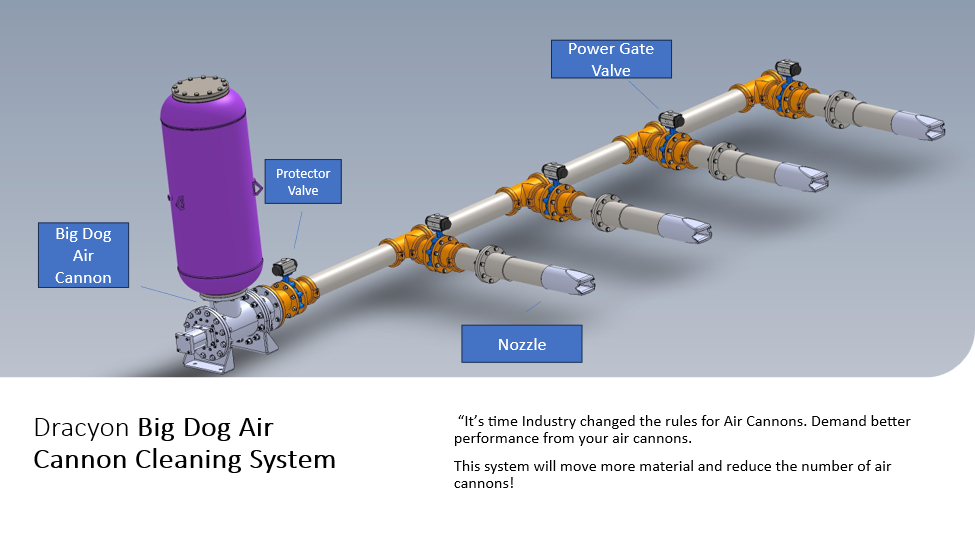
The above approach was reported to not to be effective due to the pressure drop reduction! Yes, relocation of the air cannon away from the discharge will reduce pressure. This system has proven to be more effective in cleaning and has increased reliability. The reasons why compressed air can be effective in cleaning is discussed in a separate paper. This approach was applied selectively to four applications that historically generated the highest maintenance and downtime impacts. In general this plant demanded more from their air cannons. The traditional approach is outdated.
Application 1: Clinker Cooler
Operating Challenge
The clinker cooler experienced frequent snowman formation, resulting in repeated unplanned outages. Existing air cannons were installed directly across the cooler inlet, exposed to high temperatures and aggressive particulate environments.
Legacy Configuration
- Multiple air cannons distributed across the inlet
- Standard 4‑inch discharge non-focused nozzles
- Cannons located close to extreme heat and material sources
Typical installation of air cannons on Cooler. Photo taken at another plant. Air cannons are located near the heat, and material ingress occurred and caused failures. Reports that workers’ hard hats would melt in this application because of the heat! One key to success is air cannon reliability and this hash environment does not allow this. It is Dracyon opinion that all air cannons would fail when applied in this manner. You must protect your air cannons just as you must protect your workers from the environment> Both are extremely important for a successful air cannon installation!
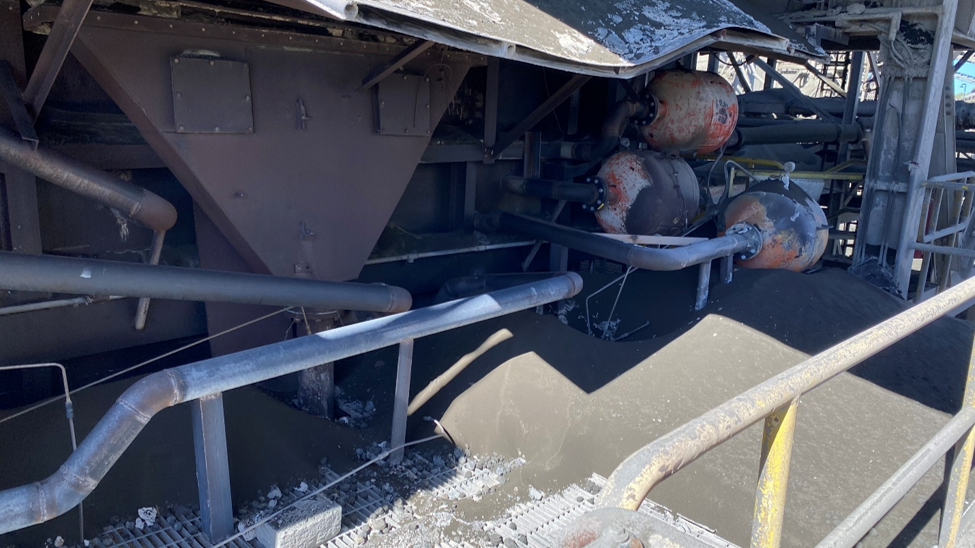
This configuration led to frequent valve failures and inconsistent cleaning effectiveness. Air Cannon are preventative devices and must be reliable! Good air cannon operations do not move snowmen but prevent them!
Revised Configuration
The system was redesigned to improve performance, simplify the installation, and better direct discharge energy to the target area.
- Multiple cannons replaced with a single, larger‑capacity air cannon
- Discharge nozzles increased to 6 inches from 4” Smart Nozzle (focused verses non focused)
- Air cannon relocated away from high‑temperature zones
- Piping added to route discharge energy to the target area
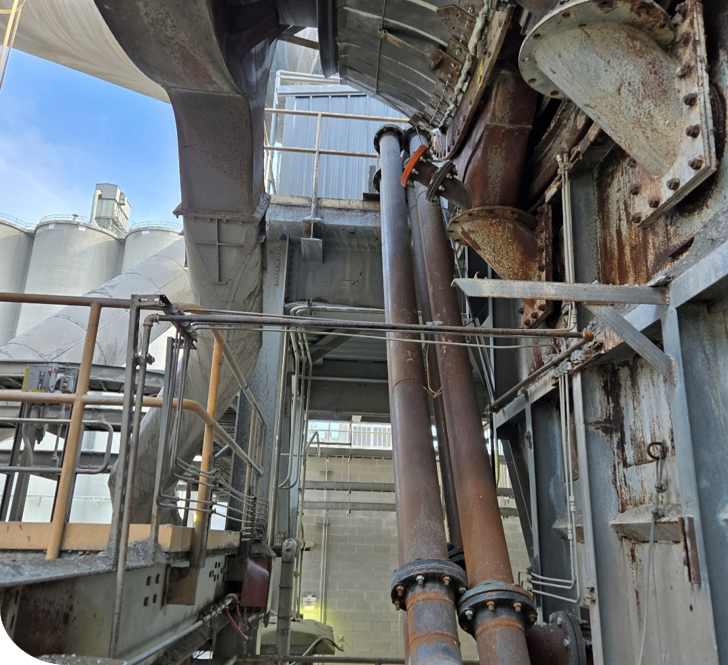
Air cannon installed so that it is protected from the environment (#1 cause of failure) of air cannons.
long pipe run designed to promote high flow. The flow (velocity ) is a key to cleaning. This system throws clinker to the other side of the cooler. Very successful application and explore new horizons for air cannons. If you protect your air cannon then your air cannon will protect you from process issues, ROI is good based on process improvements. (less than 1 month)
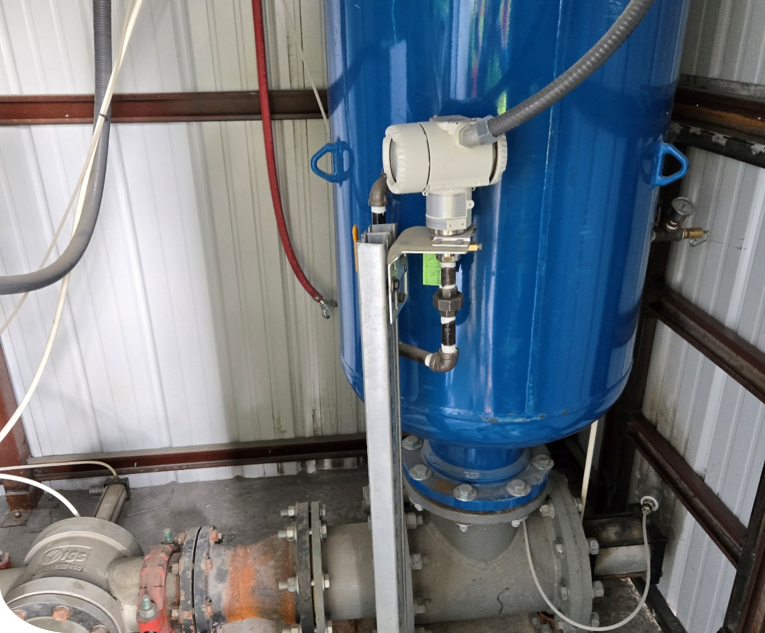
Air cannon is mounted in convenient location and is protected from the environment. System has pressure transmitter in stalled which monitor proper discharge of the air cannon. Pressure should drop to zero in less than one second when firing.
Results
- Snowman formation eliminated
- System reliability significantly improved
- Continuous operation achieved for three years
- Only maintenance issue observed was wear at pipe bends due to material ingress, now addressed through piping design improvements
- Before installation snowmen were a continuous problem and now are not! The Dracyon air cannon Cleaning system prevents the formation of snowmen instead of moving them
This installation demonstrated that remote mounting did not reduce cleaning effectiveness when system design accounted for momentum delivery rather than just peak force. Cleaning is much improved! Cleaning area extended from 1 meter to a much greater amount (5 meters).
Application 2: Shale Storage Silos
Operating Challenge
Two shale silos, each with a capacity of approximately 1,800 tons, experienced repeated flow blockages due to moisture‑affected shale adhering to internal walls. The shale was transported over long distances (mostly covered) moisture was obtained in the quarry. When exposed the shale becomes very sticky and would clog the flow and create down time!
Previous Mitigation Attempts
Previous attempts to control the buildup relied on methods that were labor-intensive, unreliable, costly, or disruptive to plant operations.
- Manual online cleaning (labor‑intensive, unsafe, and damaging)
- Traditional air cannons (ineffective and unreliable)
- Forced shutdown cleaning using heavy‑duty rotating equipment (expensive and disruptive)
Revised Configuration
The revised configuration focused on simplifying the system while delivering more consistent, effective coverage of the problem area.
- Multiple legacy air cannons replaced by a single, higher‑capacity air cannon
- Optimized nozzle placement for full‑wall coverage
- Focus on sustained, repeatable discharge performance
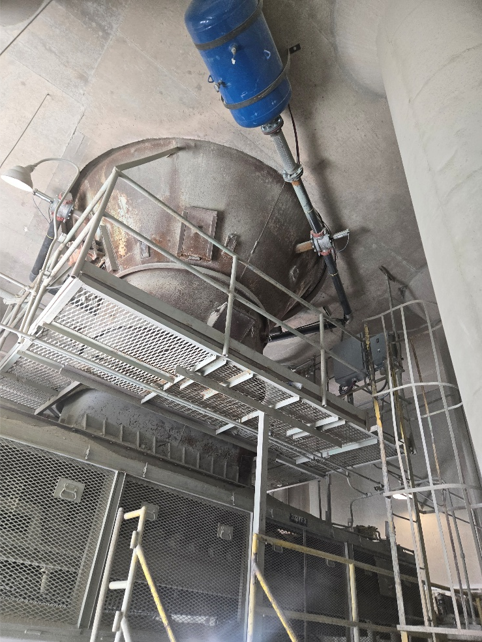
Proper Nozzle placement is critical. The air cannon is placed in an inconvenient location but due to the in -frequent operation and high reliable service this has not been an issue. Based on sequence and the fact this air cannon has been protected from the environment maintenance is not expected for 15 years. Understand your application and install based on this knowledge, success depends upon power, nozzle placement and reliability. It doesn’t matter how powerful your air cannon is if it doesn’t work. It also doesn’t matter how reliable your air cannon is if it isn’t cleaning. Success depends on the correct placement and design of the nozzle as long at the air cannon is powerful and reliable. All three features determine success.
Results
Many of the problems associated with air cannon failure are entirely avoidable. They often stem from poor installation practices. The most common of which are:
- Elimination of wall buildup air cannons are operated manually when buildup starts to occur.
- Restoration of consistent silo discharge
- No further need for manual or forced‑shutdown cleaning
Application 3: Crusher Dryer
Operating Challenge
The crusher dryer processed material high moisture content 37% to 40% (mud) making it one of only a few such systems currently in operation. Prior to modification, this system was the leading cause of unplanned outages at the plant.
Legacy Limitations
The legacy air cannon system lacked the power and reliability needed to effectively control persistent material buildup.
- Multiple underpowered air cannons
- Frequent failures
- Inability to dislodge cohesive material The air cannons failed to control the buildup.
Revised Configuration
The revised configuration consolidated the system around fewer, higher-capacity air cannons using the same proven engineering approach applied to the cooler installation.
- Consolidated system using fewer, higher‑capacity air cannons
- Same engineering approach applied as in the cooler installation.
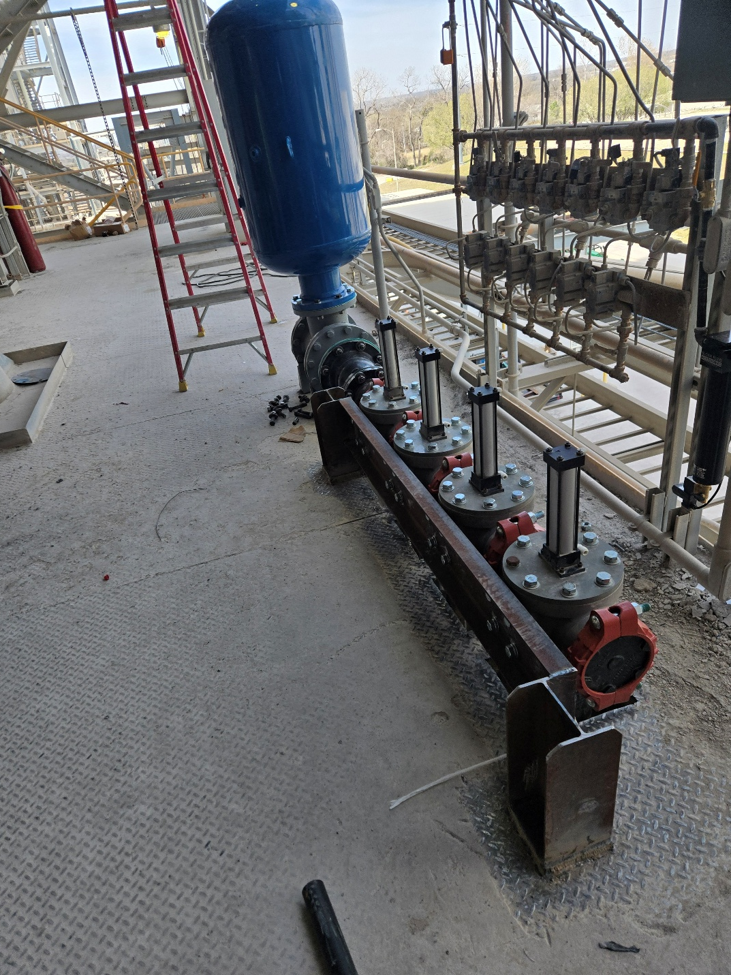
Location is convenient for when maintenance may be required. It doesn’t matter how powerful your air cannon is if its not working. All air cannons will fail but the time between failures on this air cannon is longer because it is protected from the environment! The environment is the #1 factor in determining air cannon failure.
It also doesn’t matter how reliable your air cannon is if its not cleaning. This system has proven to extend cleaning area and make this a successful application. Peak force does not move stubborn material but energy does. The greater the energy greater amount of material that can be moved! It about following Science!
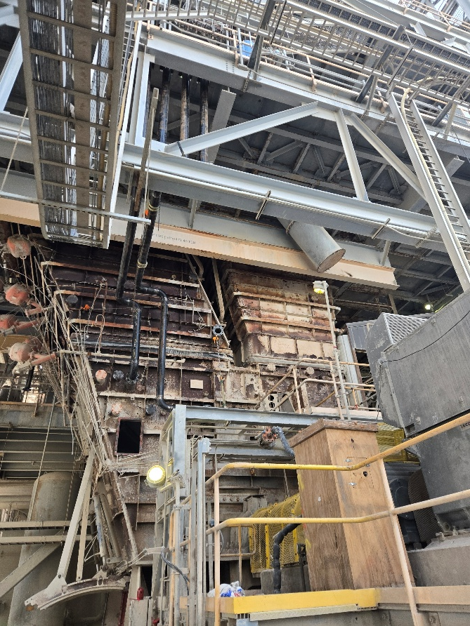
Focus is kinetic energy and momentum and not peak force. 100% there will be a pressure drop because of the pipe run! We estimate 60% but we convert pressure into velocity and use a 6” Nozzle. Did you know (100 psi for a 4” and 40 psi and a 6” nozzle equal about the same peak force.
Peak force is area time pressure! Area is important buit the longer blow (greater air volume which is energy) and the nozzle design (focused blast) is the difference maker! Think about it the longer you can impact the material with enough energy to move the material the greater amount of material you move! Simple!
Results
The revised system delivered measurable operational improvements, eliminating daily manual intervention and forced shutdowns while improving overall system performance.
- Reduction in crusher motor amperage
- Elimination of manual intervention Before installation this was required daily and now is not required!
- Forced shutdowns eliminated
- System deemed successful, with plans for future expansion
Application 4: Kiln inlet analyzer cleaning
Operating Challenge
High temperatures caused repeated failures (every 6-8 weeks between failures) of piston‑sealed air cannon valves.
Revised Configuration
The revised configuration improved reliability while minimizing installation costs by retaining existing components and reducing the valve’s exposure to direct heat.
- Replacement of piston‑seal valve with an alternative valve design
- Existing air tank and nozzle retained to minimize installation cost
- Valve isolated from direct heat exposure
Results
The revised system restored reliability while maintaining cleaning effectiveness, confirming that thermal exposure—not discharge energy—was the primary limiting factor.
- Reliability restored-improvement still needed
- Cleaning effectiveness maintained
- Demonstrated that thermal protection—not discharge energy—was the limiting reliability factor
Conclusions and Lessons Learned
This case study shows that declining air cannon performance in modern cement plants is largely attributable to outdated design assumptions rather than fundamental limitations of technology. Key lessons include:
- Fewer, properly sized air cannons can outperform numerous legacy units
- System placement and protection are critical to reliability
- Momentum delivery and flow volume are more relevant than peak force alone
- Remote mounting can improve durability without compromising cleaning effectiveness
By aligning air cannon system design with modern operating conditions and sound engineering principles, the plant achieved substantial improvements in reliability, safety, and operational stability.